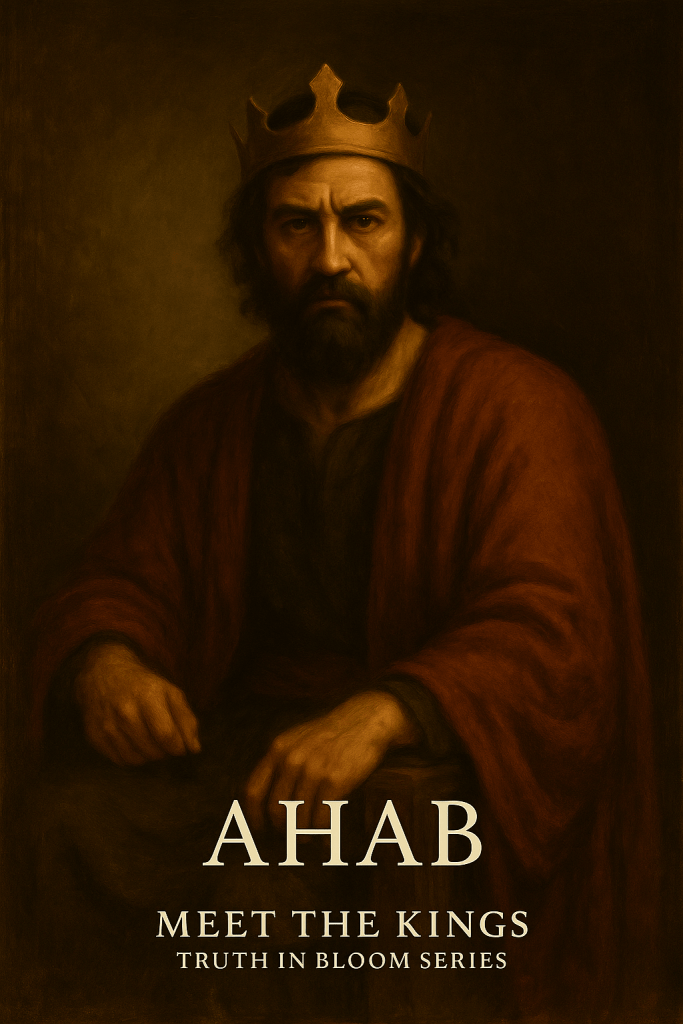
Meet the Kings | Truth in Bloom Series
Scripture Focus:
1 Kings 16:29–22:40
Reign: 874–853 BC (22 years, King of Israel)
Who Was Ahab?
Ahab was the son of Omri and the seventh king of Israel — and his reign is one of the most infamous in Scripture. He ruled during a time of political strength but spiritual rot. Ahab didn’t just tolerate idolatry; he married it.
His alliance through marriage to Jezebel, a Phoenician princess and priestess of Baal, brought Baal worship into the heart of Israel. He built altars to Baal, erected Asherah poles, and provoked the Lord more than any king before him (1 Kings 16:33).
Ahab’s story is marked by confrontation — most notably with the prophet Elijah, who became his spiritual thorn and God’s uncompromising mouthpiece. From the drought and the showdown at Mount Carmel to the murder of Naboth and the prophetic declaration of his doom, Ahab’s reign is a collision of power and truth.
And yet… Ahab was not beyond reach. After Elijah pronounced judgment, Ahab tore his clothes, fasted, and humbled himself (1 Kings 21:27). And God noticed.
His end came in battle, pierced by an arrow in disguise — just as God had foretold. But even in death, Ahab reminds us: God’s word always stands, and no earthly throne is above it.
Key Themes to Reflect On
1. Compromise Opens the Door to Corruption
Ahab married into idolatry and let it shape a nation. What we allow into our lives often reshapes our legacy.
• Reflection: Have I allowed relationships or alliances to shape my convictions instead of the other way around?
2. God Confronts, but He Also Responds to Repentance
Ahab was wicked — but when he humbled himself, God delayed judgment. Mercy still met him, even in his mess.
• Reflection: Do I believe God can still respond to me, even after major failure?
3. Truth Will Always Stand, Even When Leaders Resist It
Elijah stood alone against a system of power and idolatry — but he wasn’t silenced. God’s word cut through.
• Reflection: Am I willing to stand for truth, even when it costs me influence or comfort?
Scriptures Worth Sitting With
• 1 Kings 16:30–33 – Ahab’s sins exceed all before him
• 1 Kings 18 – Elijah vs. the prophets of Baal at Mount Carmel
• 1 Kings 21:1–29 – Naboth’s vineyard, Jezebel’s plot, and Ahab’s moment of repentance
• 1 Kings 22:29–40 – Ahab’s disguised death, fulfilling prophecy
What We Often Miss
• Ahab wasn’t cartoonishly evil — he was emotionally complex. He grieved, repented, listened… and yet still returned to compromise.
• His story reminds us that being a “bad king” doesn’t mean God stopped speaking. Ahab had access to prophets, truth, and mercy — he just resisted it.
• Jezebel gets a lot of the spotlight, but Ahab was not manipulated — he was complicit. He chose comfort over covenant.
Application & Reflection
• Are there places in my life where I’ve softened my stance to maintain comfort or connection?
• How do I respond when the truth challenges me — do I repent, ignore it, or retaliate?
• Do I trust that God sees even my smallest steps toward humility?
Up Next:
Jehoram – A Son’s Reign, A Father’s Legacy Lost
After Jehoshaphat’s faithful leadership, his son Jehoram takes the throne in Judah — but rather than walk in his father’s footsteps, he follows a darker path.
Ahab #MeetTheKings #TruthInBloom #1Kings #KingOfIsrael #JezebelAndAhab #SpiritualCompromise #ProphetsAndPower #ElijahVsAhab #BiblicalKings #OldTestamentLessons #LegacyOfIdolatry #LeadershipMatters #BibleStudySeries
 Truth in Bloom