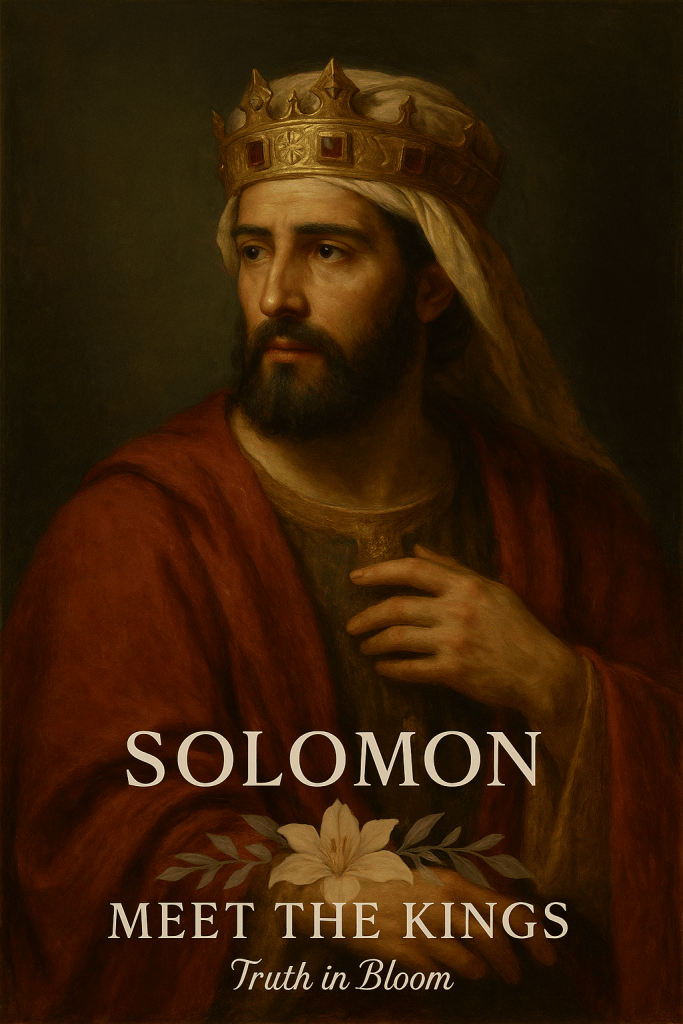
Scripture Focus:
1 Kings 1–11 | 2 Chronicles 1–9 | Proverbs | Ecclesiastes | Song of Songs
Who Was Solomon?
Solomon was the son of King David and Bathsheba, a union that began in scandal but was later redeemed by grace. Though not David’s eldest son, Solomon was chosen by God and affirmed by the prophet Nathan to carry on the royal line. His very name, Solomon, comes from the Hebrew word shalom, meaning peace — a foreshadowing of the kind of reign he would begin: calm, consolidated, and full of promise.
Before he ever sat on the throne, Solomon faced resistance. His brother Adonijah tried to claim kingship for himself (1 Kings 1), forcing David to intervene. With prophetic guidance and priestly anointing, Solomon was crowned, and his reign began — not with conquest, but with worship.
Solomon is remembered for:
His wisdom, divinely granted after he asked God for discernment to govern well
His wealth and influence, which drew the attention of rulers like the Queen of Sheba
His authorship of much of the biblical wisdom literature
His building of the Temple, which housed the Ark of the Covenant and became the center of worship for generations
But for all his strengths, Solomon’s later years were marked by compromise. Foreign wives, political alliances, idol worship — they chipped away at his devotion. Scripture tells us, “his heart was not fully devoted to the Lord his God, as the heart of David his father had been” (1 Kings 11:4).
He was a man of paradox — passionate yet passive, wise yet wandering. His story is both an inspiration and a warning.
Key Themes to Reflect On
1. Wisdom Over Wealth
“Give your servant a discerning heart to govern your people and to distinguish between right and wrong.” (1 Kings 3:9)
Solomon could have asked for anything. He chose wisdom — not for selfish gain, but for service.
Reflection: When I pray, am I asking for the kind of wisdom that blesses others?
2. The Drift of Compromise
“His wives turned his heart after other gods.” (1 Kings 11:4)
Solomon didn’t fall in a day. His decline came through a slow erosion — small steps away from obedience, blurred lines between diplomacy and disobedience.
Reflection: Am I guarding my heart? Are there subtle compromises I’ve justified?
3. The Weight of Legacy
Solomon’s legacy is complex. He built the most magnificent Temple Israel ever saw. He also introduced idol worship that fractured the kingdom. He wrote Proverbs to instruct, Ecclesiastes to wrestle with meaning, and Song of Songs as a poetic picture of love.
Reflection: What story will my life tell when the sum of it is weighed?
Scriptures Worth Sitting With
1 Kings 3:5–14 – Solomon’s dream and request
Proverbs 4:7 – “Wisdom is the principal thing…”
Ecclesiastes 12:13 – “Fear God and keep His commandments…”
1 Kings 11:1–13 – The tragedy of a divided heart
What We Often Miss
Solomon’s prayer was kingdom-centered, not self-centered. He asked for what he needed to lead well.
The Temple took 7 years to build, but his palace took 13. That ratio is worth pondering.
He wrote passionately about wisdom, but later ignored the very counsel he gave.
His name meant peace, yet he imported conflict by bringing in false gods.
God didn’t remove him immediately — He allowed Solomon’s reign to continue, but set the stage for division after him. Grace and consequence walked hand in hand.
Application & Reflection
Do I truly value wisdom above success or comfort? Where might I be tempted to compromise in small ways? What legacy am I leaving behind, intentionally or unintentionally? Am I listening to the wisdom I share with others?
Up Next:
Rehoboam – When the Kingdom Cracks
Solomon’s son inherits a fractured kingdom and must choose between wise counsel and peer pressure. His choice changes everything.
#MeetTheKings #Solomon #WisdomAndWarning #TruthInBloom #KingdomLegacy #HeartOfWisdom #LessonsFromSolomon
 Truth in Bloom